North of Milan, before the hills climb toward Lake Como, there is a stretch of Lombardy where furniture is a family trade rather than a design magazine subject. Brianza is the name of it, and the towns along its roads — Monza, Lissone, Meda, Cantù — have spent generations cutting, veneering and finishing wood. Some of that work still happens in small workshops behind unmarked doors: one bench, a few clamps, a stack of boards waiting to become something.
If you are looking for a woodworking class in the area, one question matters more than the rest, and course pages rarely answer it head-on: in a single session, what will you actually make? The difference is between going home with an object you will use and going home having watched someone else work.
Why wood matters here
Brianza is defined as a hilly region of Lombardy between Milan and Lake Como, crossed by the river Lambro and rich in water. Textile industries came first; wood and mechanical industries followed, and the second wave became the area's identity. You can still read it in the signage along the provincial roads and in the local vocabulary, where veneering or seasoning need no explanation. For a visitor the consequence is concrete: good timber is here, the machinery is here, and so are the people who use it every day rather than only on Saturday mornings.
What you actually build in half a day
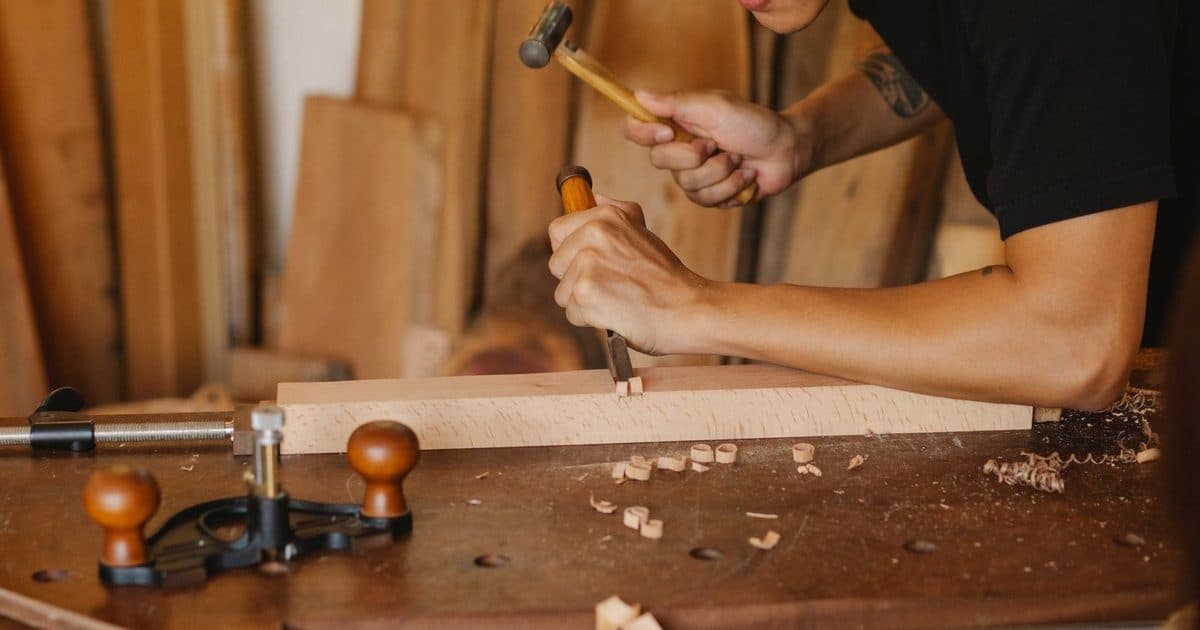
A short session is not a compressed course. It is a project chosen because it fits the time available, and wood insists on its steps in order — cut, square, assemble, sand, finish — none of them skippable without it showing. That is why the pieces that work well in a morning at the bench tend to be the same ones, and it has nothing to do with unambitious teaching.
- A cutting board: cutting, rounded edges, progressive sanding and food-safe oil. A classic, because every step is visible and you can put it to work in the kitchen that evening.
- A box or a small lidded container: four sides, a base, and your first serious lesson in how obvious an out-of-square corner is.
- A stool or a low bench: possible in half a day when legs and seat arrive already dimensioned, with assembly, glue-up and finishing as the heart of the session.
- An open shelf, a tray, a key holder: pieces where the hand work lives in the finish rather than in the structure.
Many workshops prepare some parts in advance, especially cuts that need serious machinery. That is not a shortcut worth being suspicious about: it is what lets you finish something instead of accumulating badly cut pieces. The experience lives in a considered assembly and a well-executed finish, not in handing a beginner a bandsaw.
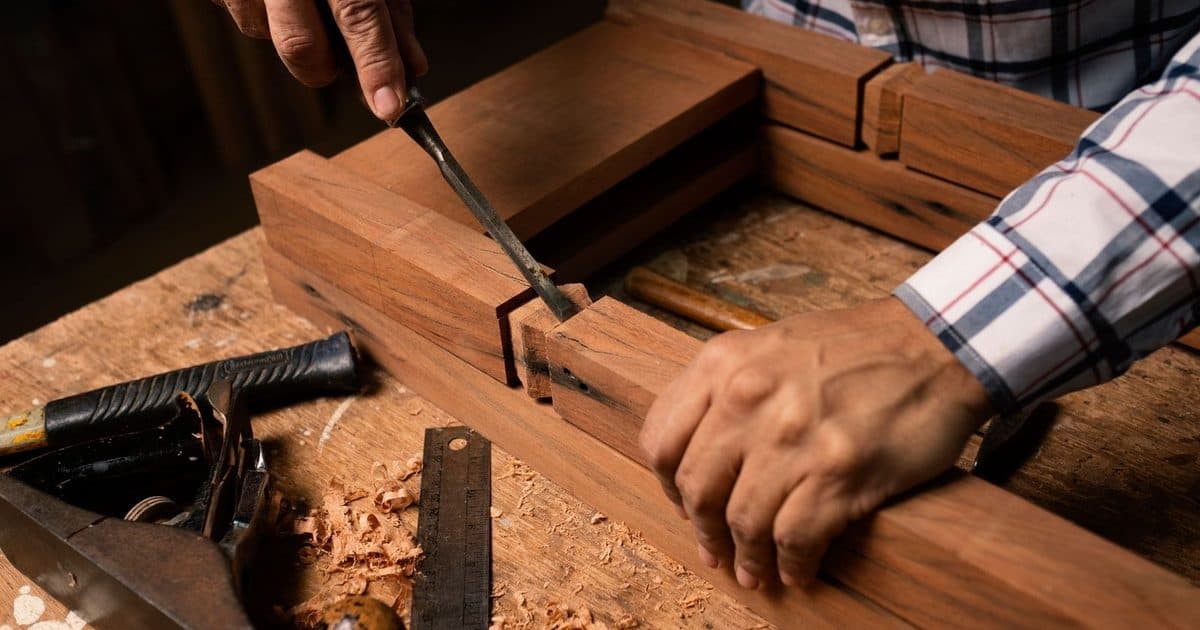
What genuinely needs a longer course is the part of the craft that will not fit into one session, and it is fairer to say so. Real joinery — mortise and tenon, dovetails — asks for a steady hand and repetition. Sharpening a chisel, hand-planing a board truly flat, reading grain direction before deciding which way to work, using a combination machine safely, designing a piece around the measurements of your own home: those are built over several meetings, returning to the same movements until they stop being deliberate. A workshop does not replace that path. It is simply the most honest way to find out whether you want to start it.
What to check before you book
The rest is usually written on the listing: the real duration, how many people share the bench, whether materials are included, and whether the piece goes home with you the same day. On that last point, be prepared — with oil finishes you may be asked to apply a second coat at home a few days later, and that is normal rather than a shortcoming. One thing Italian listings do not always spell out is language: some Makers teach in English comfortably, others less so, and asking in advance saves an awkward morning. If this is your first booking of this kind, how to choose the right workshop and what separates a workshop from a course cover the remaining questions.
On clothing there is one rule, and it is not about looking the part: nothing dangling. Closed shoes, sleeves rolled or fitted, hair tied back, no scarves or loose rings. Sawdust settles on everything, so wear something allowed to get dirty. Eye and ear protection, where needed, is provided by the workshop. Age limits are set by whoever runs the session: if minors are welcome, the listing states the age range.
Finding one between Monza, Cantù and Meda
Not every workshop in the area opens to the public, and those that do often open on set days, when production leaves the bench free. Start from published dates rather than cold calls: on Handsome the scheduled workshops can be filtered by discipline and area, each listing gives the location, the duration and the object you will make, and booking is completed online. What happens if plans change is set out on the cancellations page, so you know the terms before you pay.
Brianza is close enough to Milan to work as a day out, a reasonable detour if you are based in the city and tired of the obvious itineraries. And if wood is not everyone's idea of a good morning, the same radius offers alternatives: in Biassono there is a studio where you paint without needing to know how to draw. It also works as a present — a gift card lets the recipient pick the workshop and the date, which for woodworking is almost always the better call.
Frequently asked questions
- Where can you take a woodworking course in Brianza?
- In the working workshops of the furniture area: the belt running from Monza and Lissone toward Meda, Cantù and the surrounding towns, where woodworking has long been part of local industry. Many of these spaces work to order and open only on set dates, so the fastest route is to start from workshops already scheduled, with location, duration and the object stated up front — for example on the Handsome workshops page, filtering by discipline and area.
- Do I need experience to join a woodworking workshop?
- No, when the session is described as beginner level: the project is chosen so it can be completed without knowing the machinery, and the trickier steps are prepared or guided by the Maker. Some grounding is needed for courses that start from rough timber and work on joinery.
- What do you take home from half a day at the bench?
- A small but finished object: a cutting board, a tray, a box, a shelf, and in some cases a stool when the parts arrive already dimensioned. With oil finishes you may be asked to apply a second coat at home a few days later.
- What is the difference between a workshop and a course?
- A workshop is a single session with a concrete goal: understanding how wood behaves under your hands and leaving with a completed piece. A course runs over several meetings covering sharpening, planing, joinery, safe machine use and design, where the finished object is a consequence rather than the starting point.
- Are the classes taught in English?
- It depends on the Maker. Woodworking is forgiving here, since much of the teaching is demonstrated rather than explained, but if you want the reasoning behind each step and not only the gesture, ask before booking whether the session can run in English.
- Can a woodworking workshop be given as a gift?
- Yes: either by booking a date in the recipient's name, or with a gift card they redeem by choosing workshop and date themselves. The second is easier when you do not know their schedule or which craft they would pick.
Filter by area and craft: each listing shows the location, the duration and what you will take home.
See the woodworking workshops on the calendar