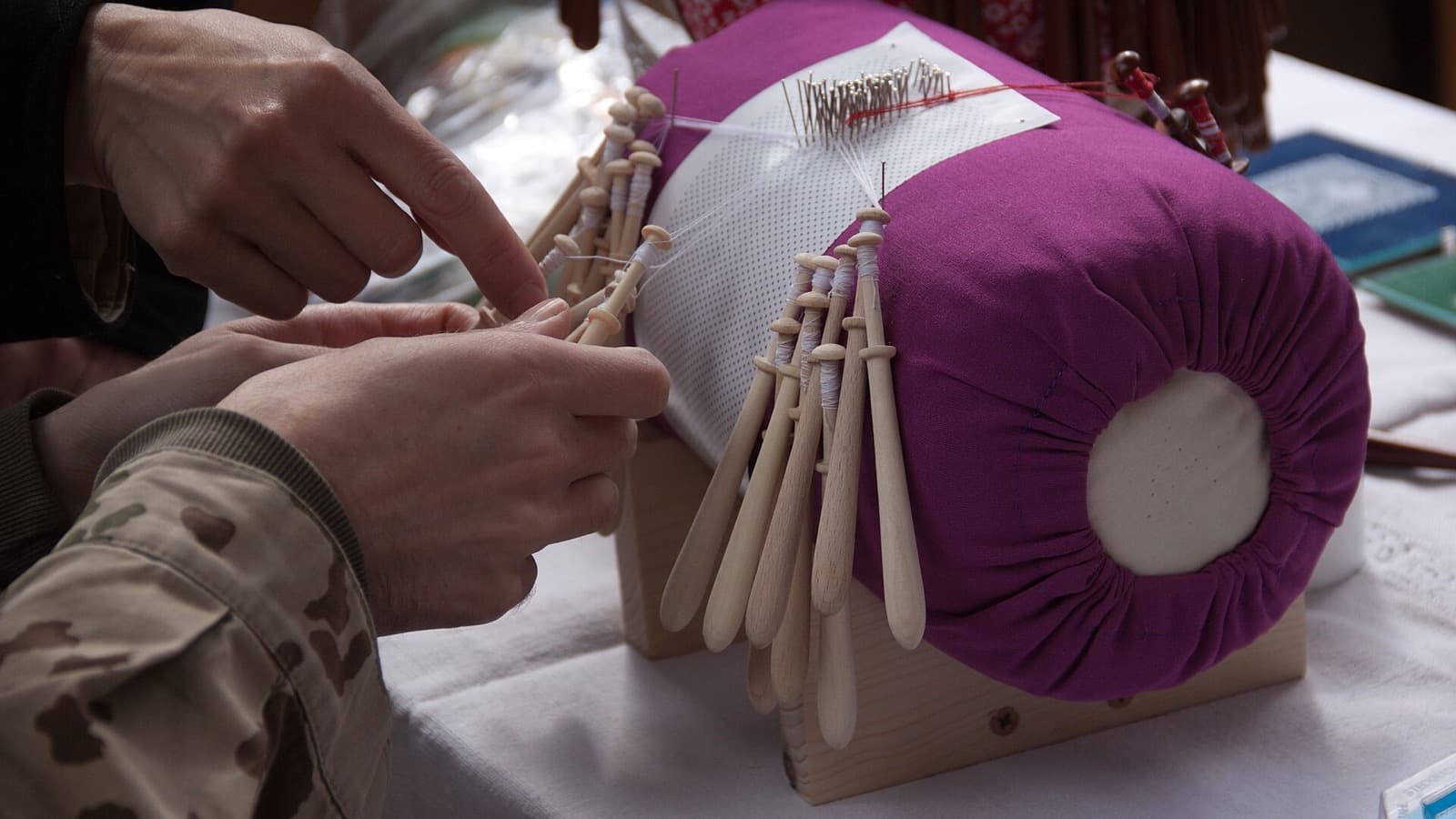
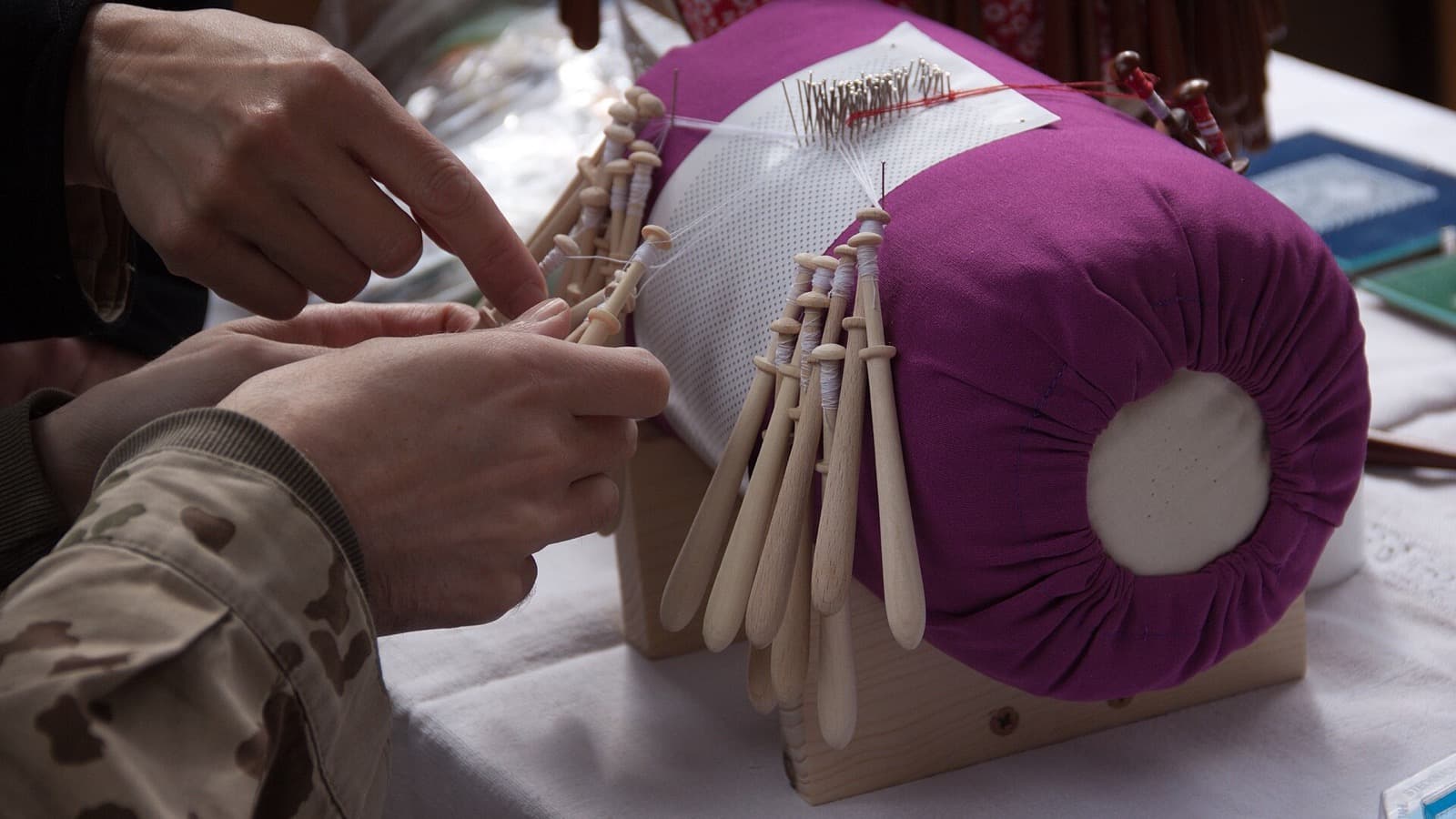
Bobbin lace is a lace-making technique worked by interlacing dozens of threads wound onto small wooden spools called bobbins ('fuselli'), guided by pins stuck into a cylindrical cushion (the tombolo) following a pre-printed pattern. In Offida, a village in the province of Ascoli Piceno in Le Marche, this art is a centuries-old tradition passed down from generation to generation by the lacemakers, so deeply rooted that it has become the very symbol of the town. It's here, watching the hypnotic rhythm of the crossing bobbins, that you finally understand how a simple thread can become a work of art.
What bobbin lace is (and why it's not like sewing)
First-time viewers are mesmerised: the lacemaker moves the bobbins in pairs with quick, precise gestures, while the tombolo — a firm cushion, often resting on a stand — is turned as the pattern progresses. No needle, no crochet hook: the lace is born purely from the interlacing of threads, fixed pin by pin.
- The tombolo: the cushion you work on, rotated to follow the design.
- The bobbins: wooden spools that keep the threads under tension; an expert moves dozens at once.
- The pins: they fix every crossing and map the pattern onto the card.
- The pattern: a pre-printed guide that sets the pin positions and the sequence of crossings.
It's a slow, meditative art — the opposite of rushing. That's exactly why it fits the philosophy of artisan workshops: what matters isn't the instant result, but the time you take to understand an ancient gesture.
Why Offida is the capital of lace
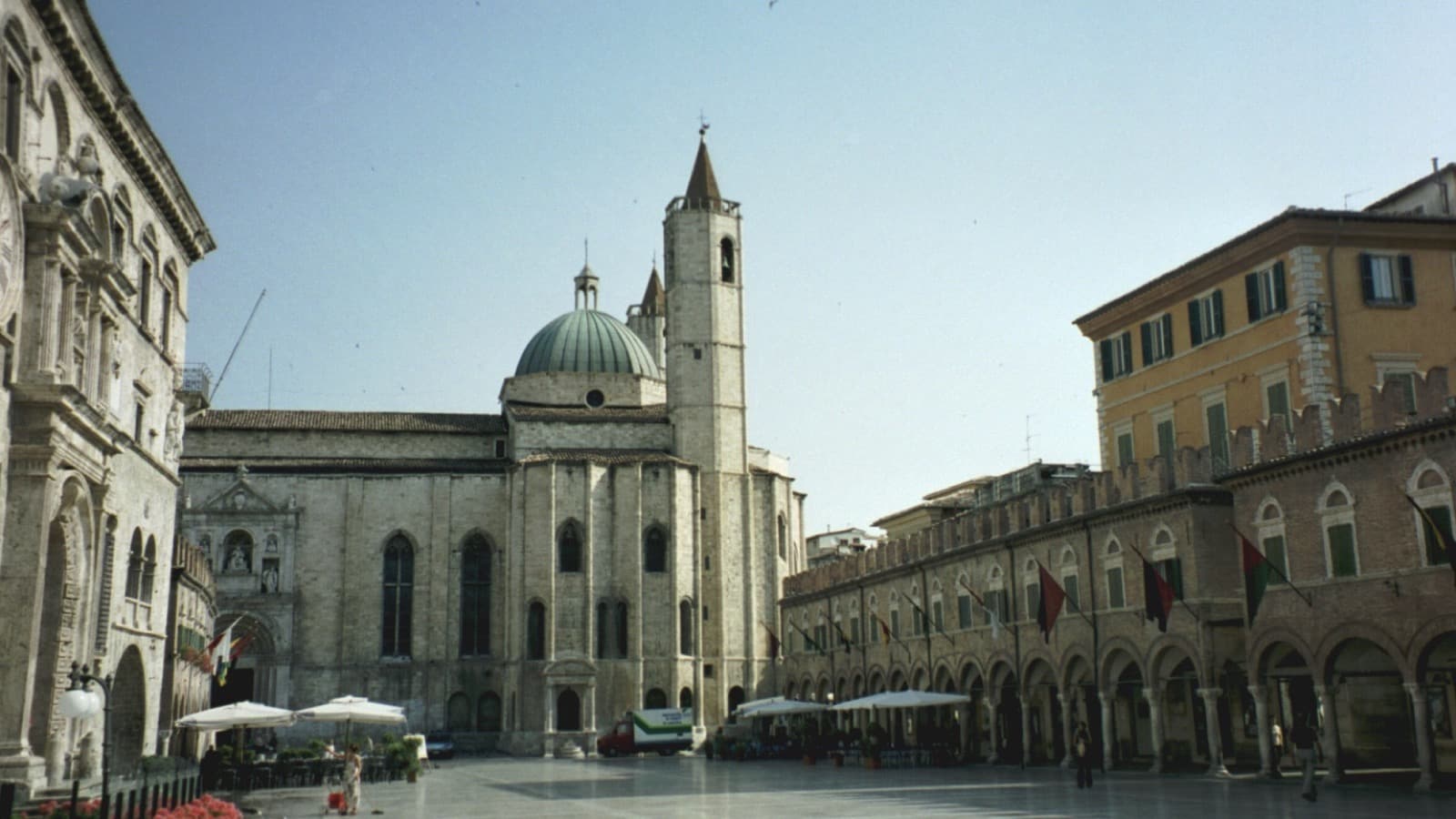
Offida is officially one of Italy's Most Beautiful Villages, a maze of stone alleys overlooking the Piceno hills. But its fame goes beyond looks: here bobbin lace is a collective identity. For centuries the women of the town worked seated in their doorways, the tombolo on their laps, turning a craft into a defining trait of the community.
Two places tell this story better than any words:
- The Monument to the Lacemaker, a statue dedicated to the women who preserved and handed down the art — a rare monument to a woman's craft.
- The Bobbin Lace Museum, housed in the eighteenth-century Palazzo De Castellotti, where you can admire historic lace, tools and original patterns.
To dig deeper into the village and its traditions, see the page dedicated to Offida on Wikipedia or the town's official website.
How hard is it? And what you really learn in a workshop
Be honest with yourself: bobbin lace takes patience and won't be mastered in an afternoon. But that's the whole point. In a beginner workshop you're not aiming to produce exhibition-grade lace: you learn the tools, make your first correct crossings and read a simple pattern, guided step by step by a lacemaker.
What you take home
- A real understanding of a gesture you'd only seen in photos: how to hold the bobbins, how to turn the tombolo.
- A small introductory piece — often a bookmark, an edging or a simple geometric motif — made with your own hands.
- Respect for the time and mastery behind every centimetre of lace.
- Direct contact with a keeper of the tradition, not a video tutorial.
Why it's a rare and authentic experience
In an age of copy-paste experiences, sitting beside an Offida lacemaker is something rare: this is knowledge at risk of disappearing, surviving only if someone keeps learning it. Booking a workshop isn't just tourism — it's a small act that keeps a craft alive. On Handsome you'll find experiences with masters and Makers who open their workshop doors, including textile and other traditional crafts.
And since you're in Le Marche, it's worth building a small itinerary: the watermarked paper of Fabriano, the travertine of Ascoli Piceno and the Renaissance workshops of Urbino round out a weekend devoted to fine craftsmanship.
On the side: a glass of Passerina between two bobbins
Offida isn't only lace. The village is also a land of great whites: Passerina and Pecorino from the Colli Piceni are fresh, mineral native wines, perfect for closing the day after your workshop. A glass in one of the wine bars in the old town, maybe with local cured meats and cheeses, is the best way to let the experience settle — without turning the trip into a wine tasting, but enjoying it properly.
Frequently asked questions
- Do I need experience for a bobbin lace workshop?
- No. Beginner workshops are designed for absolute newcomers: the lacemaker guides you step by step, from the tools to your first crossings. All you need is patience and curiosity.
- How long does a beginner bobbin lace workshop last?
- Usually a few hours — enough to get to know the bobbins, pins and tombolo and make a small motif. It's an introduction, not a full course: true mastery takes a lot of practice.
- What do you make during the workshop?
- Usually a simple piece such as a bookmark, an edging or a geometric motif, which you take home as a memento of your first bobbin lace.
- Why do the workshop in Offida specifically?
- Offida is the Italian cradle of bobbin lace: the tradition is still alive here, with working lacemakers, a dedicated museum in Palazzo De Castellotti and even a Monument to the Lacemaker.