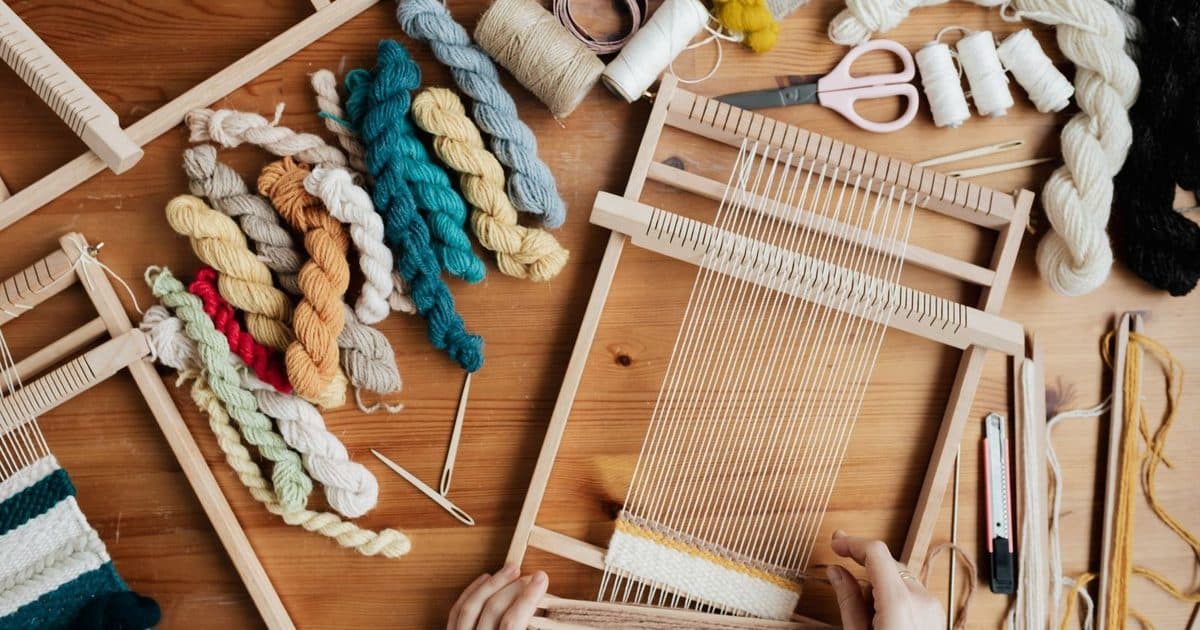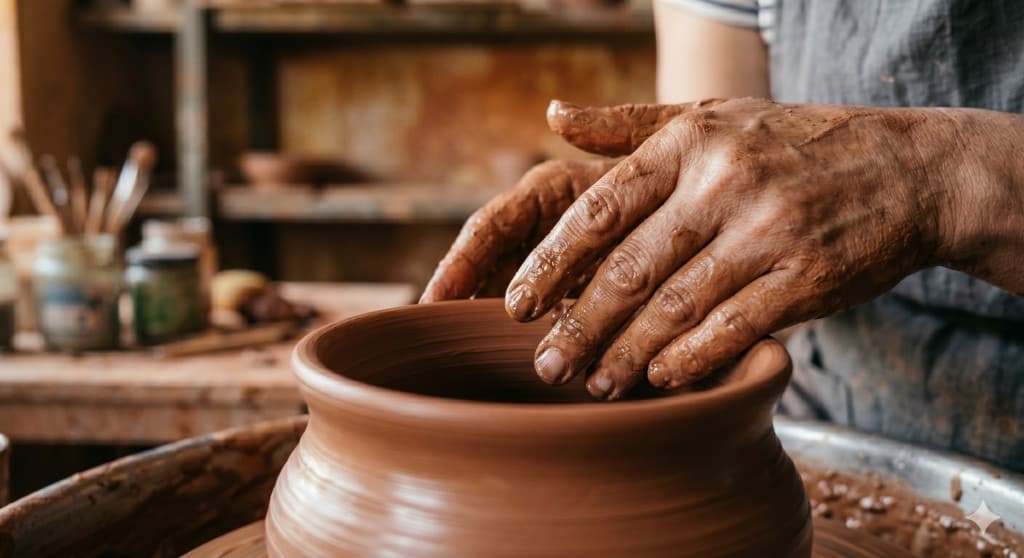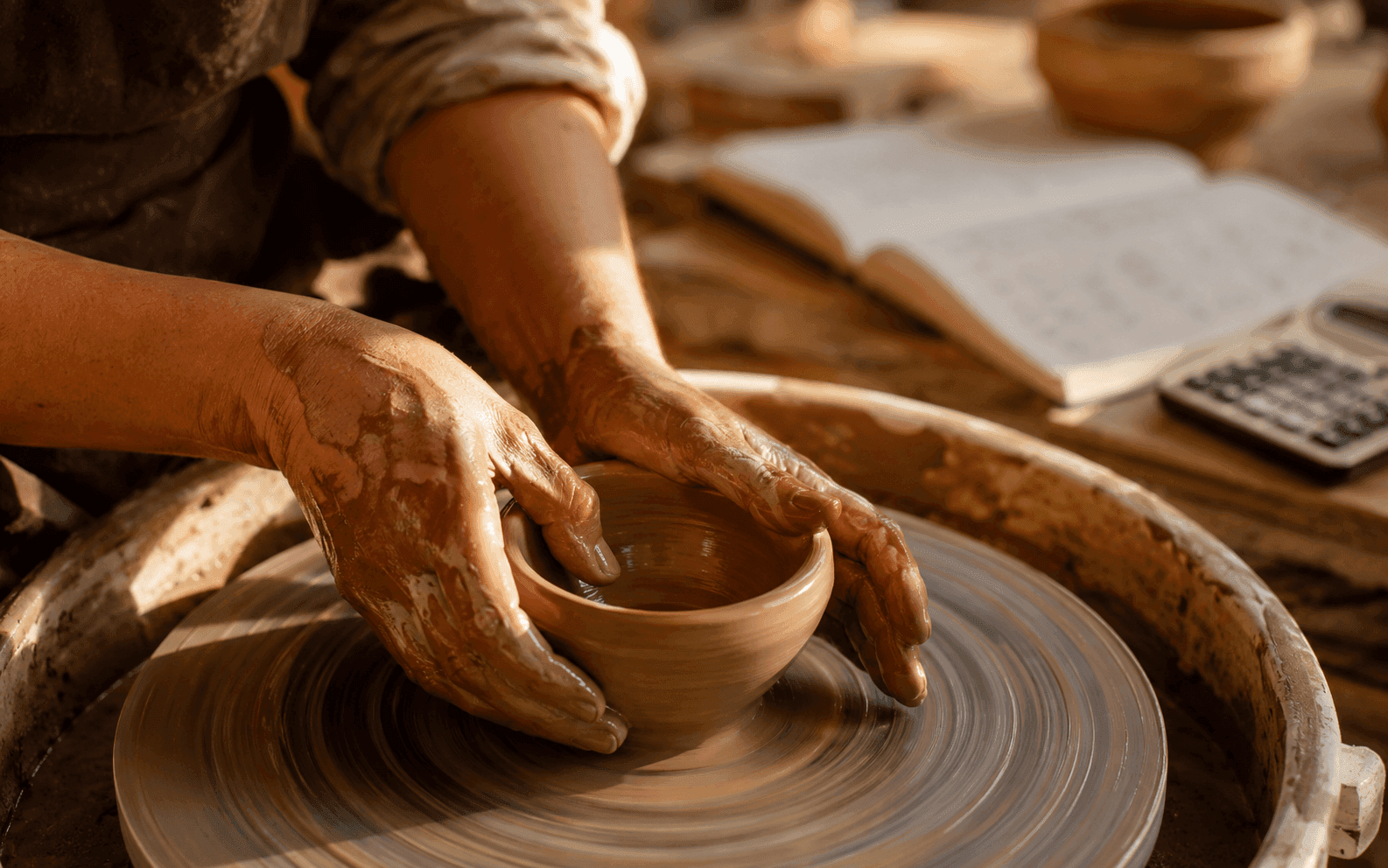

People who work with their hands in Torino usually already have almost everything they need to run workshops: the craft, the tools, a space they work in every day. What is missing is not talent, it is organising a day in which unfamiliar hands touch your things. And the first right question is not how much to charge, it is how many people actually fit at your bench without the session turning into a traffic jam.
A workshop is not a demonstration and it is not a course. The person pays to leave with an object they made themselves, within a time you decide. That changes everything you have to prepare: the piece has to fit inside the session, and the steps where a beginner can ruin everything have to be simplified beforehand, not handled on the spot. Below are the things to sort out before you open your first date, in the order they usually come up.
The space: count the bench, not the room
The maximum number of people is not set by square metres, it is set by the work surface. Take a tape measure, measure how much bench you actually have free, and divide it by the space one person needs to work with their elbows out: that is your ceiling, and it is usually lower than you expect. Count the tools too: every station needs a full set, because a single tool passed around slows down the whole session. Then do a dry run with a few friends, repeating the entire path: they come in, put down their coat, sit, work, wash their hands, leave. What does not work shows up there, not on the day you have already been paid.
- Centimetres of bench per person: measure them, do not estimate. Everyone has to move their elbows without hitting their neighbour.
- A full loop around the table for you: if reaching the last person means making half the row stand up, you lose time at every step.
- Running water nearby and an accessible toilet. Hands covered in clay, glue or colour do not wait.
- Power sockets where they are actually needed, without extension leads crossing the floor.
- Light on the work surface, not only on the ceiling: people look closely at what they are doing.
- Somewhere for coats, bags and umbrellas. In Torino, from October onwards, that is real bulk.
- A shelf where finished pieces sit and dry, out of the way.
- Air exchange if you use paints, solvents, resins or a kiln.
How long a session really takes
You have been making that movement for years and it takes you a moment. Someone who has never done it takes far longer, and first has to work out where to put their hands. When you build the running order, count at least: the first minutes while people arrive in dribs and drabs and introduce themselves; the demonstration, short and done once with everyone gathered round; the actual work, the longest part; the dead time of the material; the cleaning; the photos and goodbyes, which last longer than you think because that is when the questions arrive. If your process has a wait in the middle, something drying, resting or cooling, either you fill it with something to do, or the session deflates and people look at their phones.
The first format: pick the one that finishes
Choose the smallest object that is still complete. Not the piece that shows how good you are: the one a complete beginner can finish and take home. Then remove variables: every variable is a way the session runs long. Same size for everyone, colours prepared in advance, semi-finished parts ready for the step that takes years of practice. Look for the point in your process where a mistake destroys all the work done before it: either you stand over that point yourself, or you move it to the beginning, or you take it out of the format. And prepare spare pieces, because something always breaks and it cannot be the participant who loses their day over it.
A good workshop is not the one where you taught the most: it is the one everybody leaves with a piece they are not embarrassed to show.
If you do not have a workshop space
If you do not have your own space, or you have one and it is not suited to receiving people, you are not stuck. In Torino people often work in spaces run by someone else: the case del quartiere (neighbourhood houses), shared venues in San Salvario, Vanchiglia or Barriera di Milano, another Maker's workshop during the hours it sits idle, the back room of a business that overlaps with your audience. Before saying yes, always ask the same things: what time you can get in to set up and what time you have to leave, how much mess you can make and who cleans it, whether there is running water and how many sockets there are, what insurance cover they require, whether you can take photos and publish them. If one of those answers is missing, it is not a space yet, it is a hypothesis. How to run a workshop without a space of your own goes into this route in detail.
The first one is not done alone, and not for free
You can do it alone, but the first time it is the fastest way to end up overwhelmed: while you help one person the others are stalled, and meanwhile someone is quietly making a mistake. You need a second pair of hands — a partner, a family member, another Maker — to open the door, deal with coats and latecomers, keep time, take photos and fetch whatever is missing. Free, on the other hand, looks like a dress rehearsal and is not: someone who pays nothing has nothing to lose by skipping the date, and you will not be able to charge those same people a price the month after, because you have already said what it is worth. Run the first date at full price with few seats. On Handsome people book online with a deposit and pay the balance in the workshop on the day; the deposit goes straight to your Stripe account, the profile is free and there is no commission on the price you set. The cancellation terms are written on every workshop page, so the person reads them before paying. If you do not know where to position yourself, how a workshop price is built starts from real costs instead of from the competition.
How to fill the first date
You do not need a big audience, you need a handful of people you can reach one by one. The first date fills up through direct contacts and through the physical places where people already watch you work, not through a post published in the hope that it travels. A group that already exists fills the date in one go: on Handsome there are private events for closed groups and events for companies. And one unromantic piece of advice: open a single date. One full session, with photos of people walking out holding their piece, is worth far more to you than a string of half-empty dates.
- The people who already buy from you: a direct message, one by one, not a generic announcement.
- Neighbouring shops and other Makers: someone with a similar audience will tell them, if you ask clearly.
- People walking past: a sign in the window with the date and a QR code leading to the workshop page.
- The market or fair where you have a stall: there, people are already watching your hands.
- The venue hosting you, if you work in a casa del quartiere or a shared space: it almost always has its own mailing list and its own calendar.
- Publish far enough ahead that someone can fit it into a Saturday: free time is decided in advance, not on the day.
- When it is full, say so. "Last seats" and "sold out" make the next date work.
Frequently asked questions
- How many people can I take on my first workshop?
- Fewer than you would let in. A small group can be followed, a large one cannot: the number comes from counting the stations, not from wanting to fill the room. You can always open a second date; a session where half the room waits for their turn cannot be recovered.
- Do I need a VAT number to run workshops in Torino?
- It depends on how and how much you do it, and it is not something to settle by reading an article. Book an appointment with an accountant before your first date, not after: bring the price you have in mind, how many sessions you expect to run in a year, and whether you also sell your own pieces. The rules change according to your situation, and fixing it afterwards always costs more than asking first.
- Is a short workshop better than a full day?
- To start with, short. A short session costs the participant less and tells you quickly where your process jams. A full day makes sense once you already know how long each step takes with people who have never done it, and when the piece genuinely cannot be finished in a short time. Keep in mind that a long day also needs a lunch break, and that has to be organised.
- Can I run workshops only for closed groups, like a birthday or a company?
- Yes, and it is often the simplest way to start: the group arrives already formed and you agree the date together. The same preparation rules apply as for a date open to everyone, with the advantage that you know the numbers in advance.
Free profile, no commission on the workshop price, online deposit paid straight into your Stripe account.
Set up your Maker profile