A Murano furnace can sell experiences without breaking its production cycle if it treats the visit as one more job slotted into the furnace's idle time, not as a break from work. The furnace stays lit, the maestro keeps making the pieces on the order sheet, and guests come in through a precise window: while glass is annealing, while the crew switches jobs, while the floor is free but the crucible is not. Compared with an ordinary day, what changes is the running order, the space reserved for watching and how many people it can hold safely.
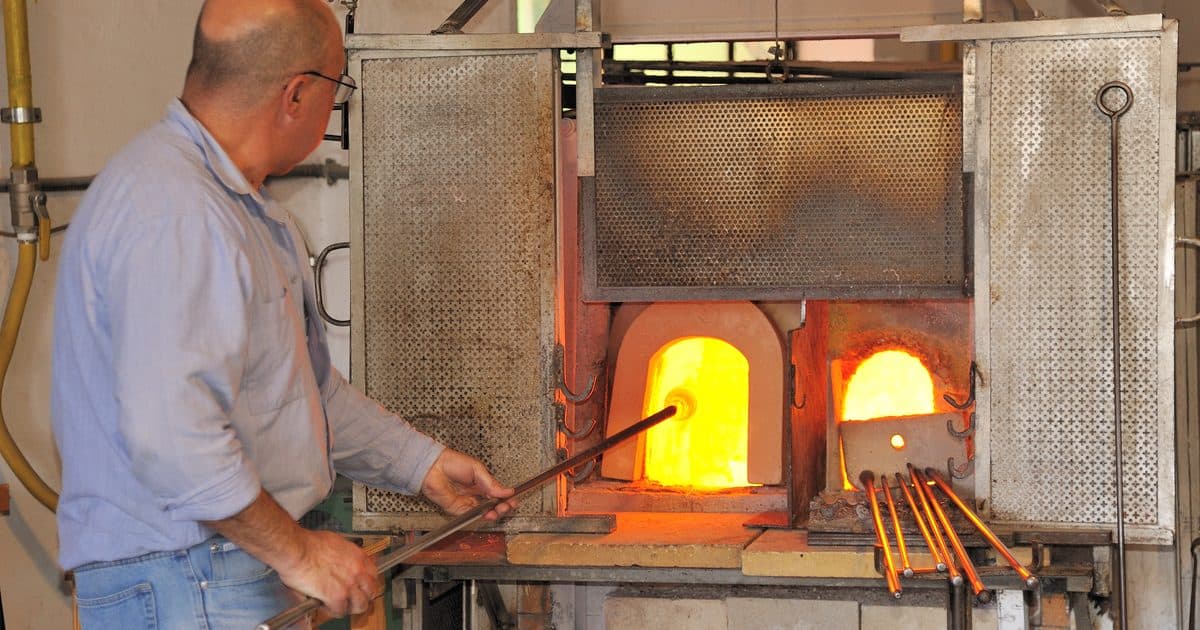
You know the constraint better than anyone: the melting furnace never goes cold. It burns day and night, and every hour of empty floor with a full crucible is glass that costs without producing. That is why the obvious options fail. Closing an afternoon to "do the visits" burns production and turns the experience into a staged demonstration, when people who come to the island for Murano glass want to see a furnace that is actually working. Letting anyone who knocks walk in mid-job puts people with no experience a step away from a hot blowpipe. The third way holds both things together: production does not stop, and the guest sees the real furnace.
The furnace sets the schedule, not the other way round
A furnace day already has a rhythm, and inside that rhythm are the gaps when hands are not needed on the glass: freshly finished pieces going into the annealing kiln, the wait after the crucible has been recharged, the changeover when the crew switches colour. The visitor slot is built inside those windows, never on top of production. You do not need a new timetable: you need a week of notes on when the maestro is waiting for glass and when he has it on the pipe.
- While the morning's pieces anneal: the kiln works alone and the floor is free for storytelling or a turn at the bench.
- In the wait after recharging the crucible: the glass is not ready, the maestro is.
- At a changeover: guests watch the floor reorganise itself, which no video ever shows.
- At the end of the shift, furnace lit and pipes resting: the best window for hands-on tries, because no job is waiting.
- On maintenance and batch-preparation days: there was no production to lose anyway.
Formats that don't cost you a production day
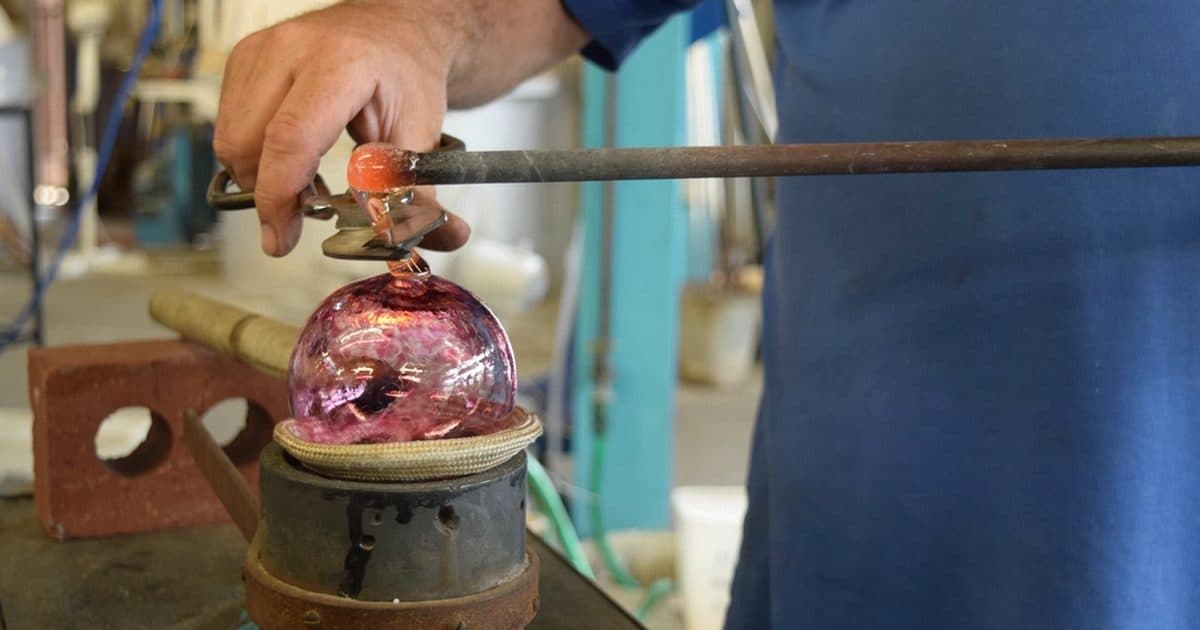
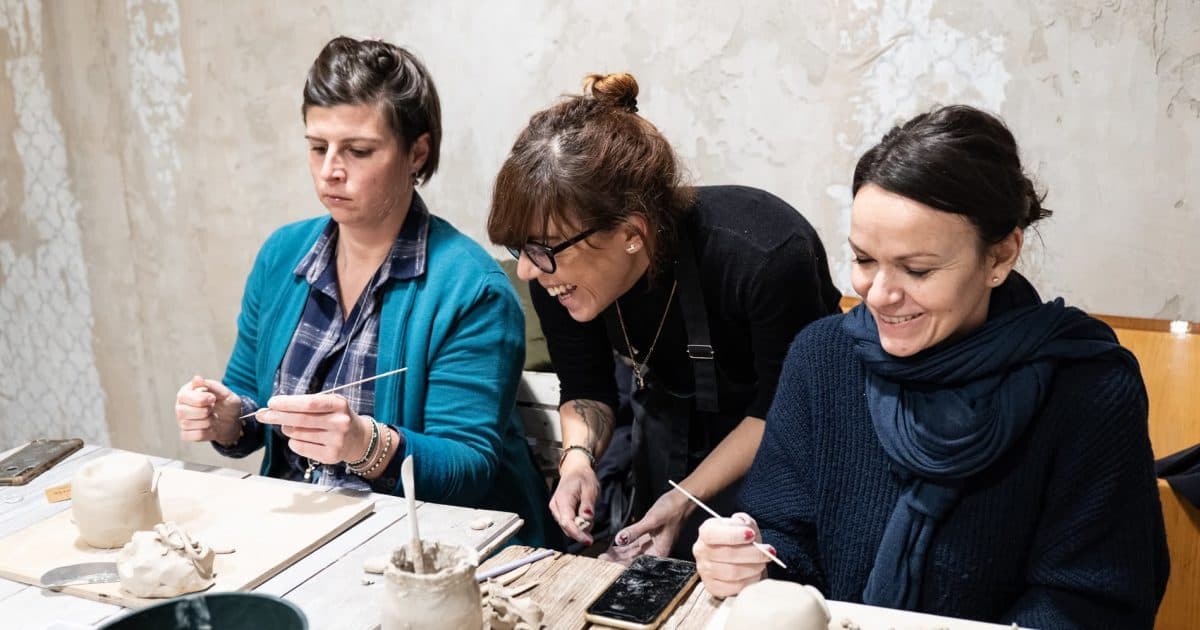
The format depends on how much reserved space you have and on who, besides the maestro, can be with the guests. The simplest is a visit with a demonstration inside production: guests watch the piece the furnace was making anyway, not a little glass horse made for their benefit. A piece made for a real order teaches more than any set-piece demo. The second is a turn at the bench: the guest makes a small object with the maestro's guidance, in a window where production is already paused anyway. The third is cold working, fusing or compositions with murrine and offcuts, at a table well away from the furnace while the floor keeps producing. Our glass and fusing workshop ideas are a base to adapt to a working furnace.
Safety distances: where the visitors stand
In a furnace, safety is drawn on the floor as a line, and whoever is watching stays behind it and never steps over, not even for the photo. You draw the line from what moves: the maestro turning with the pipe, the assistant crossing with a hot piece, the furnace door when it opens, the path to the annealing kiln. Outside those routes, with a margin for the instinctive step backwards, is the guest area. Plan for heat too: guests need somewhere to retreat without crossing the floor, because newcomers cannot stand near the furnace for long. Before you open, a refresher on safety and basic first aid in the workshop is worth more than any waiver.
How many visitors at once, and who hosts them
What sets the maximum is the space behind the line, how many people the maestro can keep in view without looking away from the glass and, for the hands-on part, how many bench positions you can supervise at once. A bigger group does not bring revenue: it brings a ruined piece and a job to redo. The method for setting the cap is in how many seats to put on a workshop, with one extra constraint: a maestro with glass on the pipe cannot be the guide. You need a second person to narrate, hold the line and manage the door: an assistant, a family member, whoever runs the office. When a tour operator wants to bring the whole coach party, the answer is the number on the floor line; saying it without losing the booking is covered in hosting tourist groups without spoiling the experience.
The furnace stops for no one. It is the visit that has to learn its rhythm, never the reverse.
Sell the slot before anyone knocks
The way not to be interrupted is to sell first. The published date is the window you have identified, with the exact start time, the seats fixed by the floor line and online payment at booking. Whoever arrives has already paid; whoever knocks without a booking finds a sign with the next date, and nobody breaks off a job to answer. The listing should say what guests see, what they do and how delivery works. If the furnace belongs to the Vetro Artistico Murano trademark, say so: people booking from abroad want exactly that reassurance. With the Handsome back office seats close automatically when the line is full and, if an urgent order eats the slot, you move or cancel the date with the refund handled by the platform under the cancellation rules. To keep visits and deliveries apart: the no-double-booking calendar.
Frequently asked questions
- Do I have to stop the furnace or halt production to open to visitors?
- No. The furnace stays lit and production carries on: visits fit into the gaps when hands are not needed on the glass, such as annealing, the wait after recharging the crucible, changeovers and the end of the shift. The floor only pauses for a bench try, in a window where it was already paused.
- Can visitors really blow glass themselves?
- Yes, with a bench try: a small object, the maestro beside them, gloves and eye protection supplied by the furnace, one person at a time while the rest watch. The piece goes into the kiln to anneal and is collected the next day or shipped.
- How many people can I let into the furnace at once?
- It depends on the space behind the safety line, on how many people the maestro can keep in view and, for the hands-on part, on the bench positions. Set the number once, write it in the listing and do not change it for a group that insists.
- What if an urgent order lands on the day of a published visit?
- You move the date or cancel it in good time, and everyone who booked is refunded under the platform's rules. To keep it rare, publish in windows production almost always leaves free, such as the end of the shift.
- How does a furnace sign up on Handsome?
- The furnace, with its VAT number, signs up as a Maker: a profile, dates with a fixed time and seat count, online payment. Someone leading the bench try without a VAT number can sign up as an Apprendista. The most common questions are answered on the FAQ page.
Sign up as a Maker, publish dates with fixed times and seats, get paid online before anyone knocks.
Publish your furnace's first date