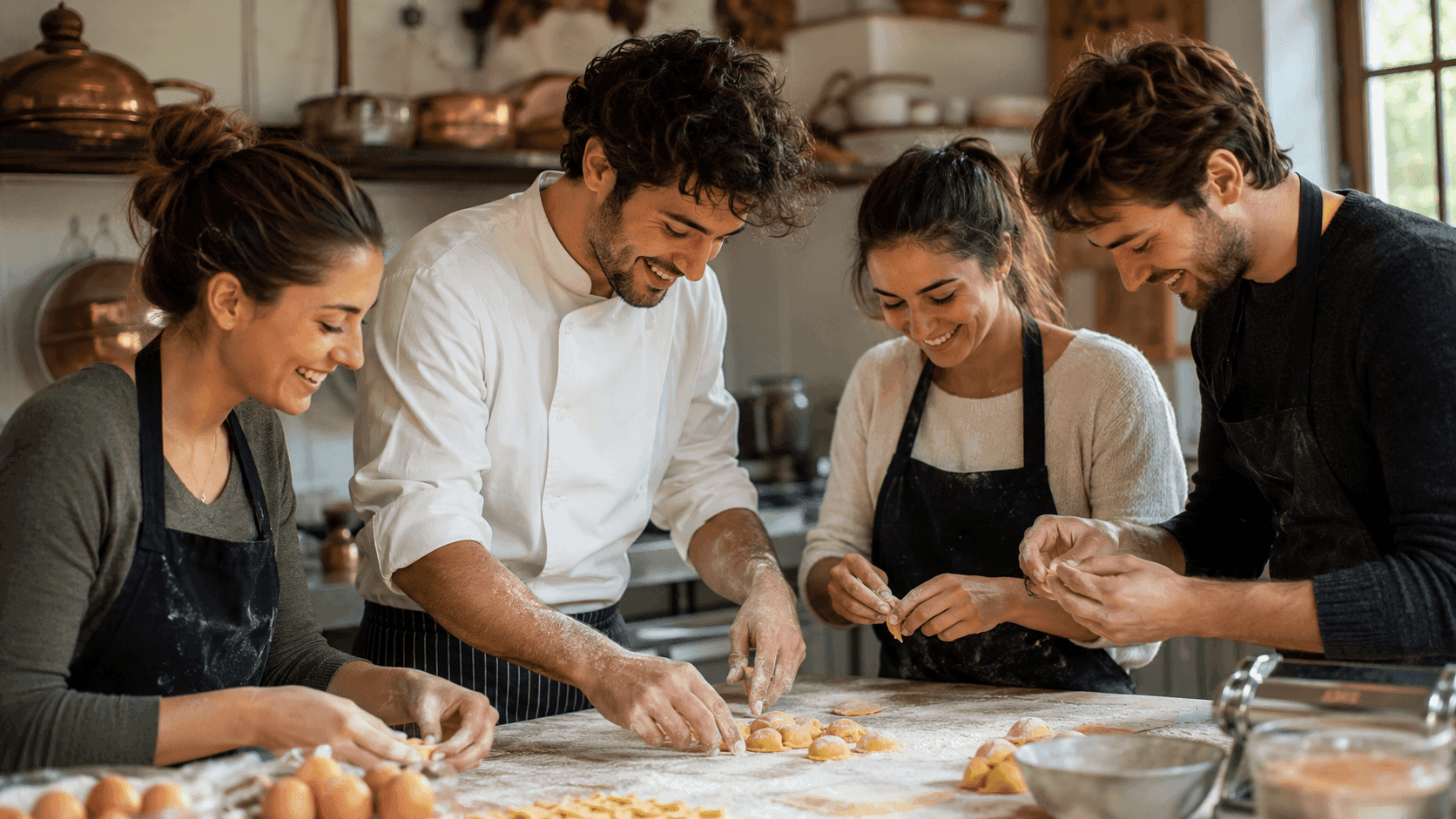
Cooking has a huge advantage over other disciplines: the result gets eaten. Nobody leaves a fresh-pasta or pastry workshop empty-handed or disappointed. But precisely because it seems easy, many improvise and the experience turns chaotic. A cooking workshop that sells and gets talked about has a precise structure, rhythm and a convivial finale. Let's look at it.
Pick a "beginner-proof" dish
The first mistake is overestimating. For a novice audience pick an iconic but manageable recipe in 2–3 hours: fresh egg pasta, gnocchi, focaccia, tiramisu, decorated cookies. Avoid long proofing or baking that locks the timing. The rule: there must always be something to do with the hands, never long dead time.
The structure that works
- Welcome and story (15 min): tell the recipe, its origin, an anecdote. Food is culture, sell that too.
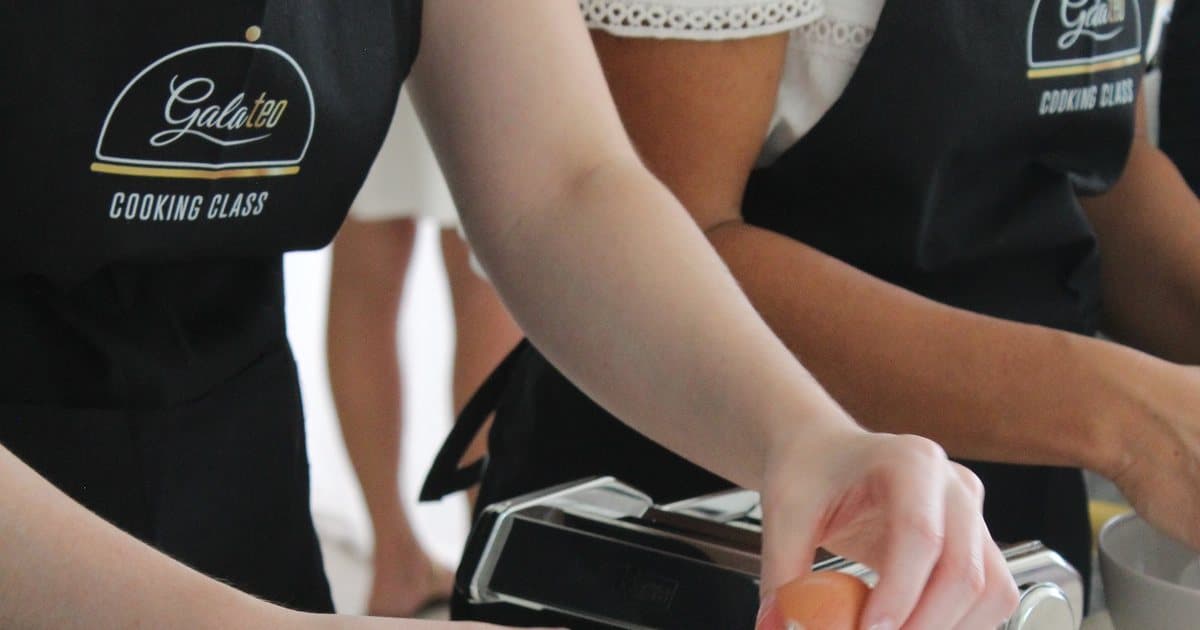
- Hands in the dough (60–90 min): the core, everyone active. Break into clear steps, demo then let them do.
- Cooking and active waiting (20–30 min): while something cooks, plate, clean together, taste.
- The final table (20–30 min): you sit and eat what you made. It's the moment that stays in the heart (and the photos).
Hygiene and food safety: not a detail
Having strangers cook in your space carries responsibility. Mind basic hygiene rules (hands, surfaces, storage, cold chain) and check the HACCP obligations for those serving or having food prepared: the institutional reference is the Italian Ministry of Health. And always ask about allergies and intolerances in advance: how to handle them well is covered in allergies and intolerances in workshops.
What they take home (beyond a full belly)
- The leftover food packaged (cookies, a portion of dried pasta, a jar).
- The written recipe, maybe branded with your name: it returns to your table every time they remake it.
- The urge to come back for "level 2": build a small ladder of courses.
Once the format is ready, publishing it on Handsome gives you a calendar, bookings with direct deposit and verified reviews (only from those who actually attended), all at 0% commission. You think about the menu, the platform handles the rest.
Frequently asked questions
- Which dish should I pick for a beginner cooking workshop?
- An iconic but manageable recipe in 2–3 hours, with always something to do by hand: fresh pasta, gnocchi, focaccia, tiramisu, decorated cookies. Avoid long proofing or baking that blocks timing and creates dead time.
- Do I need certificates or hygiene compliance for cooking workshops?
- Having food prepared and served carries hygiene responsibilities: mind the basics and check the HACCP obligations applicable to your case. The institutional reference is the Ministry of Health; validate your situation with a specialist.
- How do I make a cooking workshop memorable?
- With the convivial final table: sitting to eat together what you prepared is the moment that generates photos, smiles and word-of-mouth. Add a branded written recipe to take home.
Calendar, bookings and verified reviews. 0% commission, direct deposit.
Publish your cooking workshop