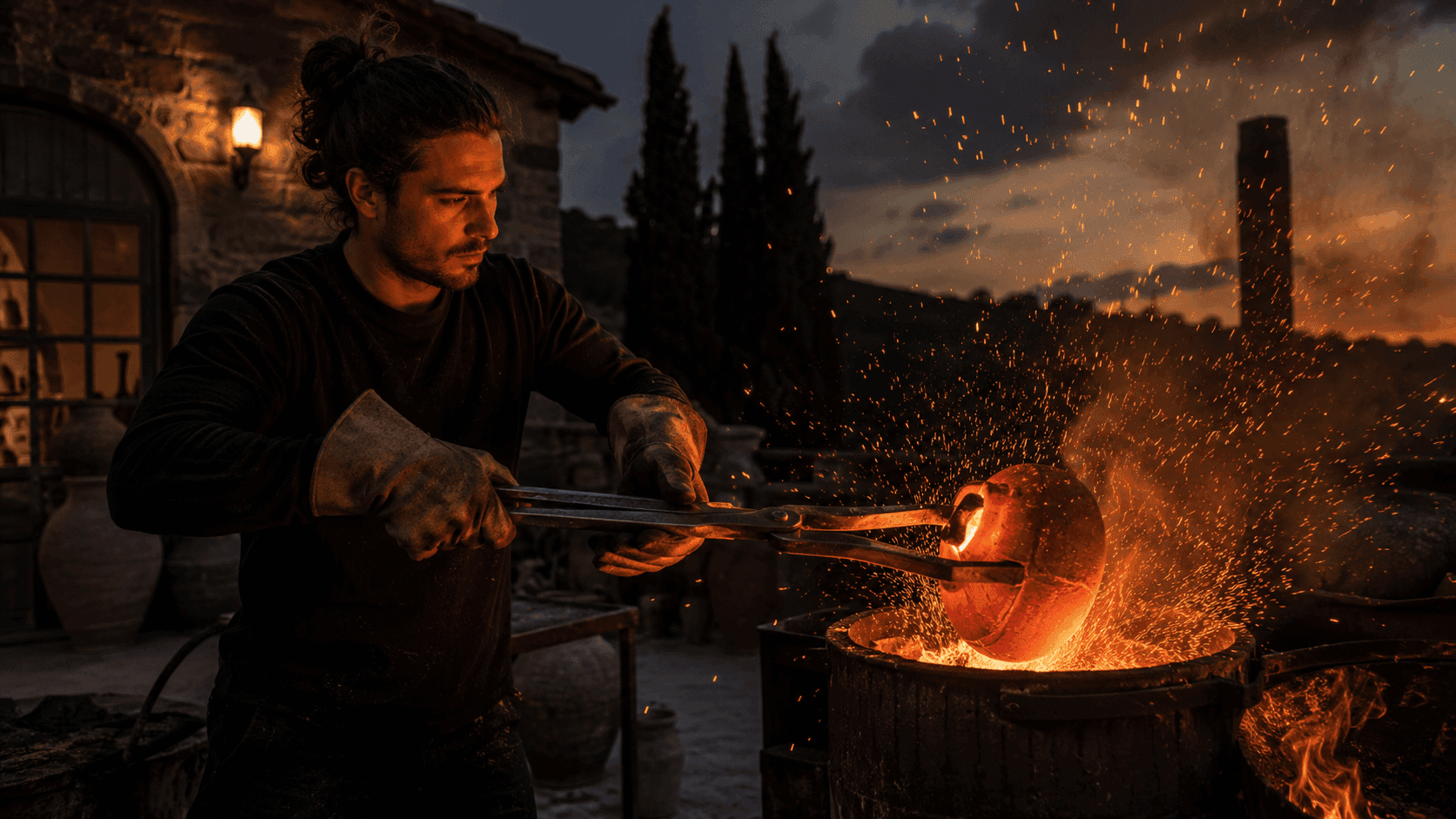
Raku (楽焼) is a Japanese pottery technique developed in 16th-century Kyoto by potter Chōjirō at the request of tea master Sen no Rikyū. It's tied to the tea ceremony (chanoyu) and Zen philosophy: beauty of imperfection, transience of fire, acceptance of chance. Today 8-10 Italian masters teach Raku in 4-6 hour monographic workshops: one of the most intense ceramic experiences for its combination of technique + philosophy + fire drama.
How Raku technically works
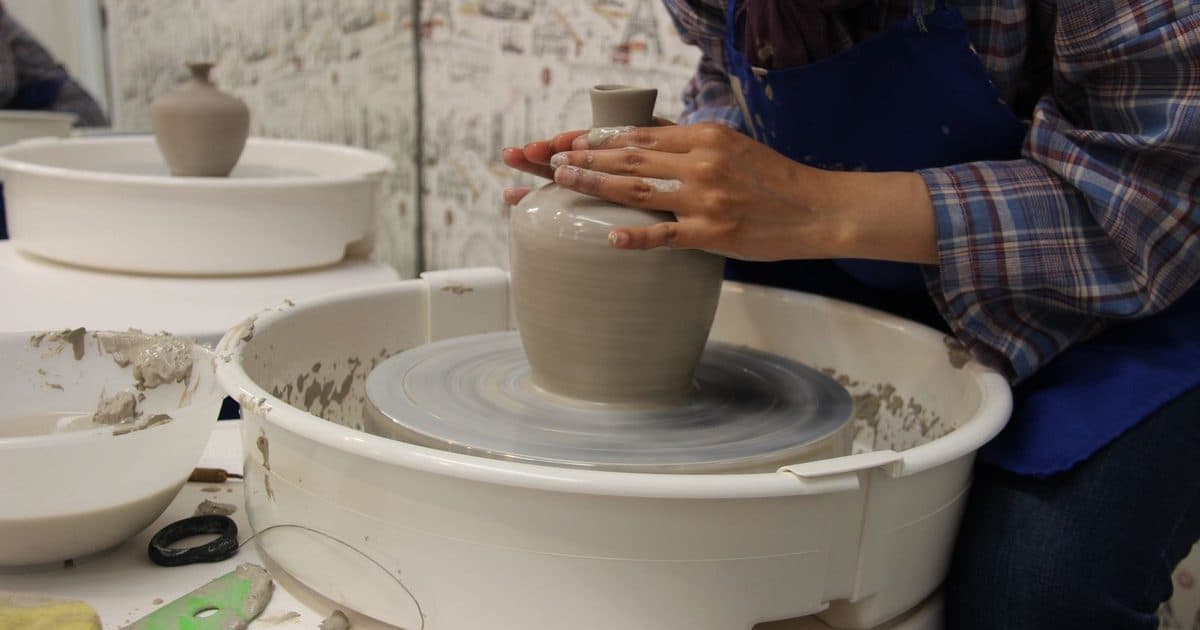
- Shaping: freehand, slab or wheel (Raku allows all approaches). Forms typically irregular, asymmetric.
- First firing: piece fired to ~950°C, comes out porous and pinkish-white ("bisque").
- Glazing: a specific Raku glaze rich in metal oxides (copper, iron, manganese) is applied.
- Fast second firing: piece goes into a gas kiln reaching 950-1000°C in 30-40 minutes (intentional fast firing).
- Reduction (the dramatic step): the GLOWING piece is extracted with tongs and immersed in sawdust, dry leaves or straw. Heat burns organic material, oxygen is sucked out, metal oxides transform: copper turns flame red, iron turns matte black, glaze cracks producing characteristic crackle.
- Cleaning and quench: glowing piece dunked in cold water. Thermal shock creates more controlled cracks.
What the cracks mean (and why they're beauty)
In Raku cracks (kannyu) aren't defects but signatures. In Zen thinking and wabi-sabi philosophy, imperfection is memory of the fire's passage. Raku's deep black cracks represent the ephemeral (mujō) and the impossibility of repeating two identical pieces. Each Raku is unique, no one can clone it: fire and reduction are chaotic phenomena.
Symbolism in the tea ceremony
Original Raku tea bowls (Raku chawan) were used in the tea ceremony (chanoyu) as humility objects: black, irregular, rough to touch, designed to contrast with the perfection of imported Chinese porcelain. Drinking matcha from a Raku bowl meant accepting transience, defect as beauty, the unrepeatable moment. The philosophy then entered global ceramic culture.
Italy: 5 cities to try a Raku workshop
- Faenza (Ravenna): Italian ceramic capital, some Raku masters have dedicated workshops.
- Albisola (Savona): Ligurian ceramic tradition, contemporary Raku ateliers.
- Deruta (Perugia): Umbrian majolica capital with some masters alternating majolica and Raku.
- Vietri sul Mare (Salerno): Neapolitan coastal tradition + Raku experimentation.
- Cattolica/Rimini: some Romagna workshops do Raku on summer days (visual suggestion of fire at Adriatic sunset).
What to expect from a Raku workshop
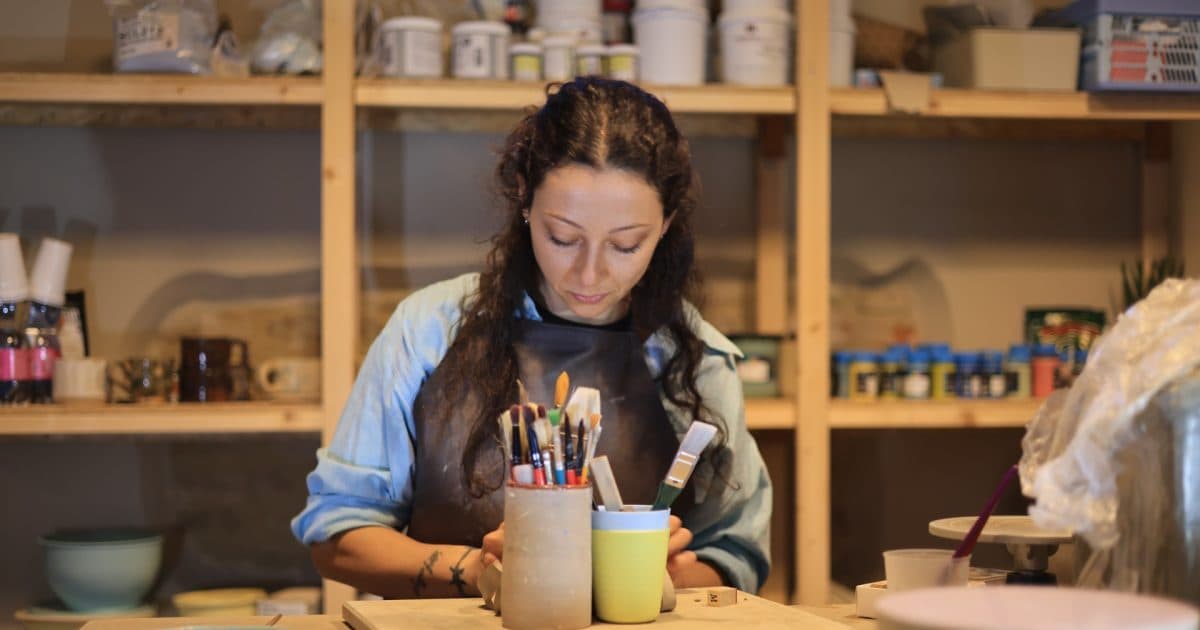
Duration 4-6 hours. Shaping and first firing may be done in advance (master prepares pieces for you), so the session focuses on the theatrical part: glazing, fast firing, reduction, quench. You'll see the piece go from white bisque to final color in ~90 minutes after firing. You leave with 1-2 of your pieces, each irreplaceable. The entire experience is outdoors (reduction produces smoke): pick non-rainy days.
Is it suitable for beginners?
Yes, with caveat. A Raku workshop suits people who've already done at least 1 normal pottery session (you appreciate colors and textures better). For total beginners who've never touched clay, do a basic pottery workshop first (see our dedicated article), then Raku. Fire is intense but safe: you use thermal gloves and tongs, under constant master supervision.
What to bring
- Clothes that can stain and don't mind smoke (Raku smells of burnt wood for hours).
- Closed sturdy shoes (no sandals, no light shoes).
- Long pants (no shorts): reduction sprays sparks.
- Tie long hair back.
- Willingness to stand 4-6 hours with focus.
Frequently asked questions
- How much does a Raku workshop cost in Italy?
- €140-260 per person for 4-6 hours, materials and firings included. More expensive than basic pottery because Raku kiln consumes more gas and specific glazes are precious.
- Can I do Raku if I have respiratory issues?
- With care: reduction produces dense smoke (even outdoors). FFP2 mask recommended if sensitive. Ask the master via Handsome chat.
- How long do Raku pieces last?
- Decades if not hit. Cracks don't widen over time. But they're fragile to impact: better not move them often.
- Can they be washed in a dishwasher?
- Absolutely not. Raku is dusted dry. Water, especially with detergents, can penetrate cracks and alter the glaze over time.
Try Raku
A 4-6 hour experience with fire, reduction and colors emerging from nothing. Unlike any other pottery.
Search "Raku" in filters or workshop description. €10 deposit.
Raku workshops in Italy