Walk from the Duomo to Santa Croce and the word “handmade” follows you the whole way: on shop signs, on bag tags, in windows showing the same wallet in every colour. Even in the Oltrarno, the quarter Florence associates with its workshops, the sign sits above real benches and above stockrooms alike, and a visitor with a few hours in town has no way of telling which is which. That is the problem for anyone who actually makes things here: your workshop and the reseller next door use the same vocabulary. You will not win with vocabulary. You win with a proof the reseller cannot fake: sit people down at your bench and let them work.
Words are the weakest defence because they cost nothing. “Handmade”, “made in Florence”, “historic workshop” can each be printed in an afternoon, which is why you find them in shops without a single tool on the premises. Even registration as an artisan business, governed in Italy by the framework law on crafts, certifies how your business is organised, not what the customer sees through the glass. It protects you before the State. In front of a tourist deciding in the next few minutes, it protects nobody.
Why “handmade” no longer works in Florence
Put yourself in the visitor’s place. They want to take something real home, and they have seen the same sign on every window. So they do the only thing left: distrust everyone, or choose by price. Either way the honest maker loses, because your hand-stitched wallet is being compared with one that merely carries the same label, and on price alone the reseller wins every time. Being able to explain the value of handmade matters, but it comes second. First the customer has to believe the hands are yours.
The proof nobody can copy: an open bench
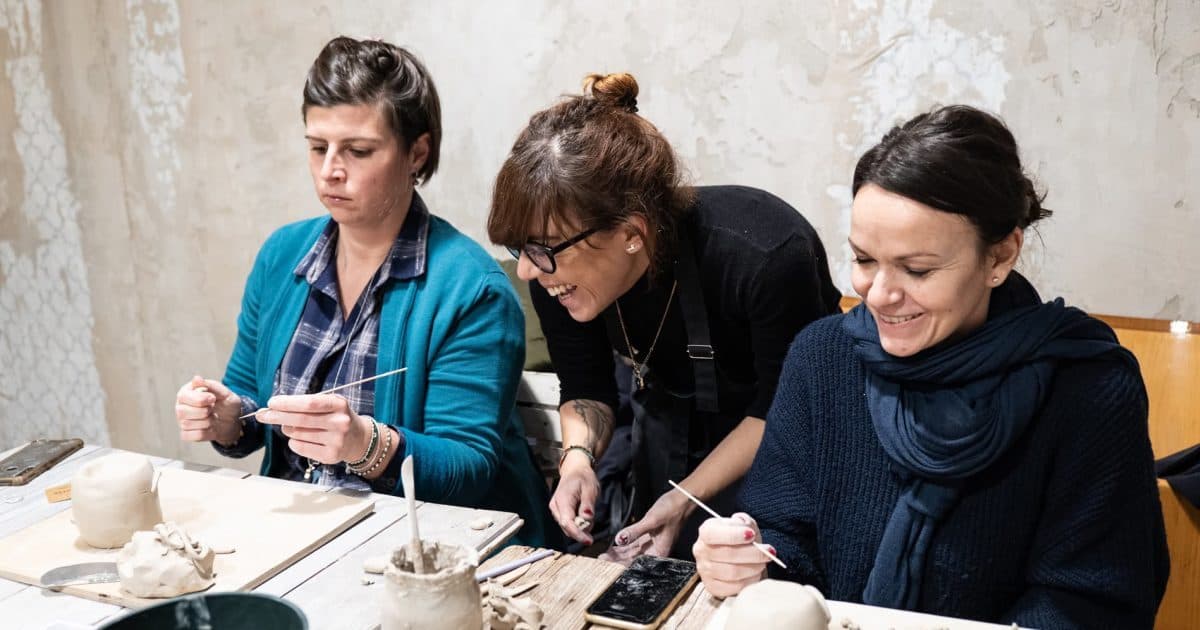
A reseller can copy your sign, your tag, even photographs of a workshop. What they cannot do is open a bench and have a customer stitch, because they have no bench, no tools worn smooth by use and, above all, no hands that know the movement. A workshop is exactly this: a certificate of authenticity issued live. A person who has spent an afternoon cutting leather from your own hide, getting a stitch wrong and redoing it, walks out knowing something no label could have told them. Here is what an afternoon at the bench establishes that no plaque can:
- The tools are used. The polished handle of an awl cannot be faked.
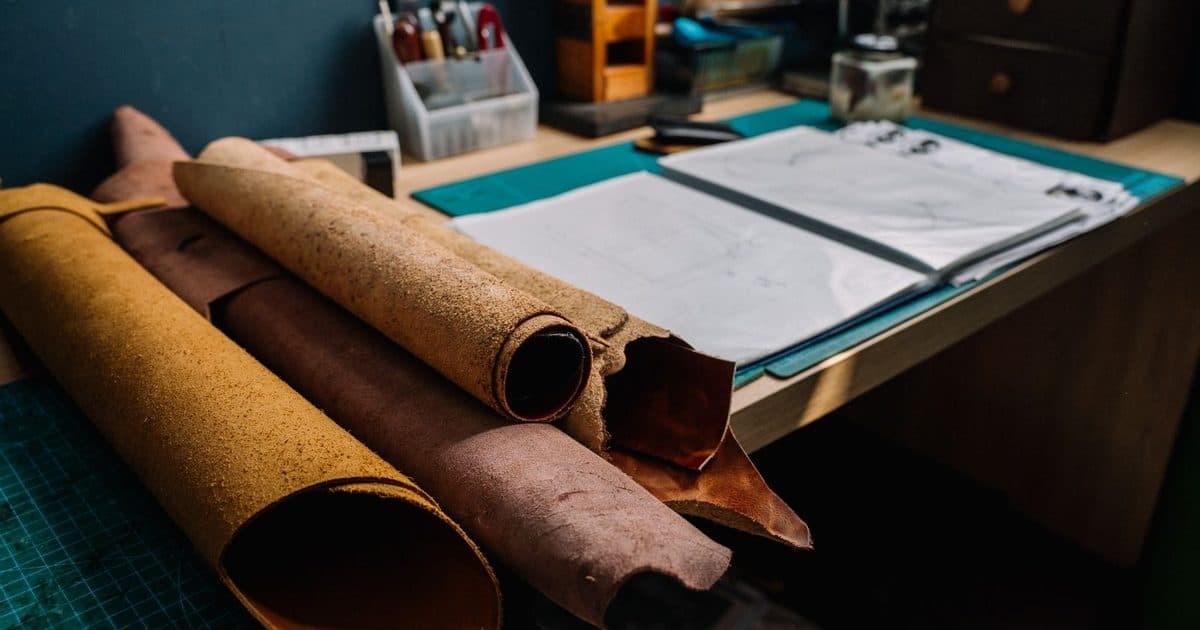
- The material arrives raw: the participant sees the whole hide, the thread, the wax, not a finished product waiting to be “personalised”.
- The time is real. When it takes them an afternoon to make a card holder, they work out for themselves what a bag costs.
- The mistakes are yours. A crooked piece corrected in front of everyone is worth more than a speech about tradition, as we explain in turning a piece that went wrong into a moment of authenticity.
- The workshop is alive: the noise, the smell of leather or clay, the work in progress on the other benches.
After the workshop, the participant becomes a witness
The value of an open bench does not end when the group leaves. Someone who has worked with you has a story to tell, and they tell it with the details that make it credible: the effort of the saddle stitch, the advice they got while cutting off the line. On Handsome, only people who booked and actually attended can leave a review, so the only voices on your profile belong to people who watched your hands at work. Photographs taken during the session do the same job for people looking at you from a distance: they show the process rather than the product. How to take them without stopping anyone is covered in taking photos during a workshop.
There is a quieter effect too. Someone who has made a card holder with their own hands buys the bag with a different understanding: they no longer ask why it costs so much, because they have measured the time on themselves. That is why selling your products at the end of a workshop, without pushing, works: it is an extension of the proof, not a sales opportunity.
Building the workshop-as-certificate without turning the shop into a show
The mistake to avoid is turning the workshop into a performance. It works as proof precisely because it is your ordinary working day with one extra bench. Choose a small object that already belongs to your production, keep the format inside the time a visitor has in the city, and let participants use your real tools rather than a practice kit. Write the listing in Italian and in English, and make it say what people will see and do, with no brochure promises: the guide to writing a workshop description in Italian and English keeps you clear of the empty phrases that sound exactly like a reseller’s sign.
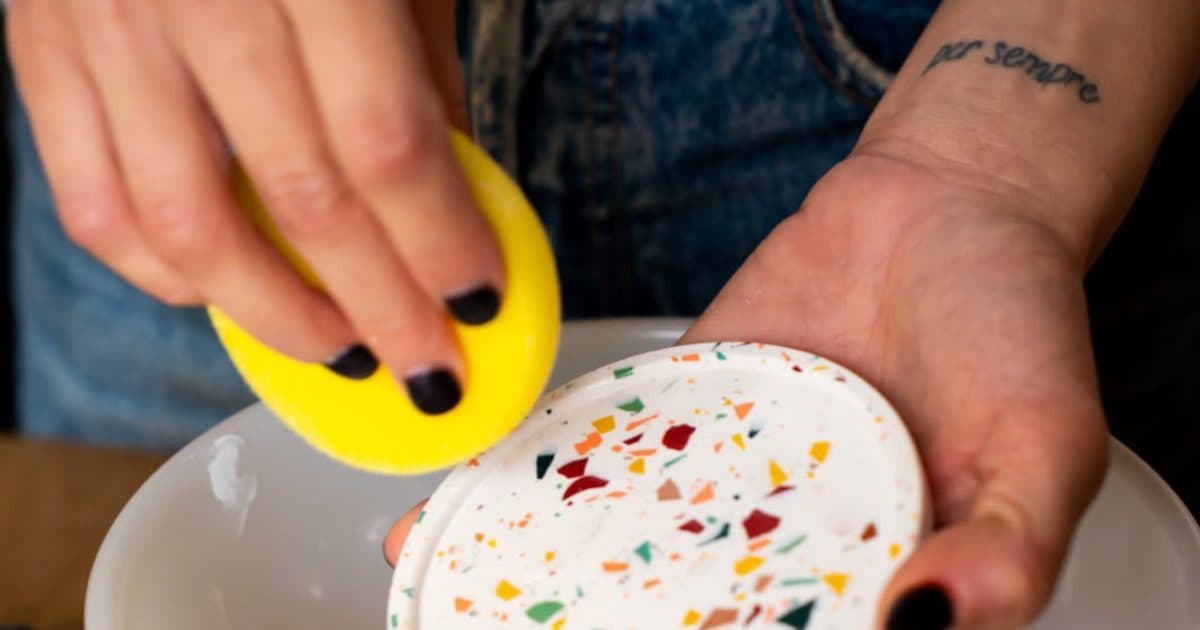
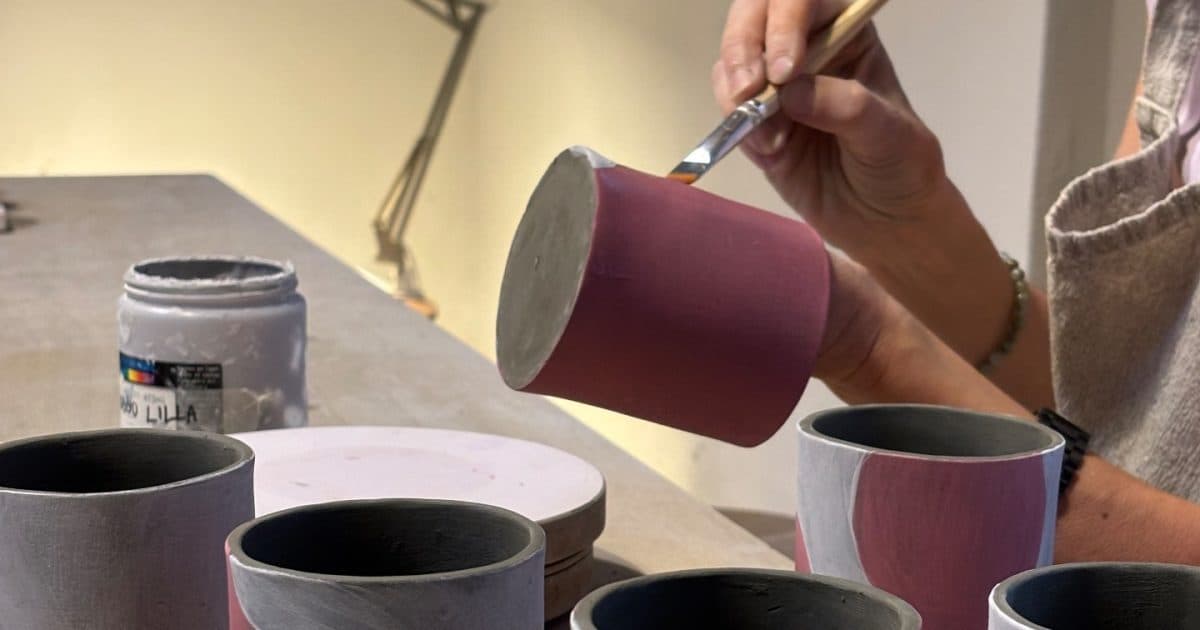
- Pick a piece from your real production that can be finished in half a day: a card holder, a small pouch, a bracelet, a tile.
- Set the format with a visitor’s day in mind: a morning or an afternoon.
- Write the listing in both languages, walking through the process step by step and saying what the participant takes home.
- Publish your dates on your profile and print the QR code to keep in the shop.
- At the end of every session ask for the review, while the piece is still warm in their hands.
A label says it is handmade. An open bench shows it. The customer believes the second one, and repeats it.
This is what sets the workshop apart from a marketing tool. A shop that resells can cut its prices and change its sign. It cannot open a bench, because a bench requires a craft, and a craft is not bought wholesale. Every session you run raises a wall your imitation competitors cannot climb, without you having to say a word against anyone. On Handsome you publish your dates, get paid online and present yourself in Italian and English as a Maker or as an Apprendista, depending on your tax position. Whoever looks you up before the trip already knows, from home, that behind the word “handmade” there is a person who actually makes it.
Frequently asked questions
- How does a Florentine artisan stand out from shops that call themselves artisan but have no workshop?
- With a proof the reseller cannot replicate: opening the bench and letting the customer make a piece with your tools and your material. Signs and words like “handmade” are available to anyone; a workshop requires a craft, a real workshop and hands that know the movement. Whoever takes part knows you make the pieces and says so.
- Do I need a large workshop to host sessions?
- No. You need one bench more than you use yourself and enough room to move safely. A small space means small groups, and the small group is what makes the proof more convincing.
- Can I run workshops without a VAT number?
- On Handsome, yes: without a VAT number you sign up as an Apprendista, with one as a Maker. The limits on occasional work are covered in the guide to occasional work for artisans and in the FAQ.
- Do foreign visitors understand the difference between a real workshop and a shop?
- Not by eye, and that is exactly the problem. They understand it after working, which is why a workshop persuades where a window display cannot. What this audience is really after is covered in what American visitors want from a workshop.
- Are reviews on Handsome verified?
- Yes. Only someone who booked, paid and attended a past date can leave one. Your profile shows no anonymous opinions: every entry comes from a person who was at your bench.
- Will workshops take time away from production?
- Some, which is why it makes sense to start with a short format and a few dates a month, inside your normal working day. That time comes back as bookings paid in advance, sales at the end of sessions and reviews that keep working for you while the shop is closed.
Publish your workshop dates, get paid online and present yourself in Italian and English to people looking for a real workshop in Florence.
Open your bench on Handsome